

The transition to 800V high-voltage architectures in the new energy vehicle (NEV) industry has pushed vehicle electrical systems to their physical limits. Automotive engineers now face smaller packaging spaces, higher current densities, and extremely demanding thermal management requirements.
Given these constraints, wiring harness engineers and procurement decision-makers face a critical dilemma: Should you rely on off-the-shelf “standard cables,” or invest upfront in a “customized cable solution”?
As a leading specialist in EV high-voltage cables and charging cables, OMG’ breaks down the technical and economic boundaries of both approaches to help you optimize your next platform.
1. Standard Cables: The Balance Between Efficiency and Cost
Standard cables refer to mature, off-the-shelf products that fully comply with mainstream industry standards, such as ISO (International Organization for Standardization), LV (German OEM standards), or GB/T (Chinese National Standards).
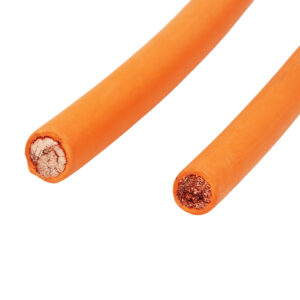
When to Choose Standard Cables:
- Rapid Prototype Verification:During the initial phases of EV Research & Development (R&D), the plug-and-play availability of standard cables significantly compresses the development cycle. This allows engineering teams to focus their efforts on validating core components like electric motors and power electronics (inverters).
- Non-Space-Constrained Zones:If the vehicle’s routing path has generous spatial clearance and is free from extreme thermal or mechanical stressors, standard cables offer an exceptional price-to-performance ratio that minimizes Bill of Materials (BOM) costs.
- Lead-Time and Budget-Driven Projects:Standard parts are typically stocked and readily available. This rapid supply chain turnaround is ideal for tight-budget, mature platform designs with conservative technical requirements.
OMG Technical Advisory: When sourcing standard cables, always verify that the supplier provides comprehensive automotive-grade certifications (such as validation reports conforming to LV 216 or ISO 19642). Skipping this verification risks quality fluctuations that could trigger costly field recalls.
2. Customized Solutions: Pursuing Peak Performance
As cell-to-chassis (CTC) integration and vehicle lightweighting become the industry standard, high-voltage cables are increasingly forced into extremely tight geometries. In many cases, they must handle both high-current power transmission and liquid-cooling pathways simultaneously. Under these conditions, customization is no longer optional—it is a necessity.
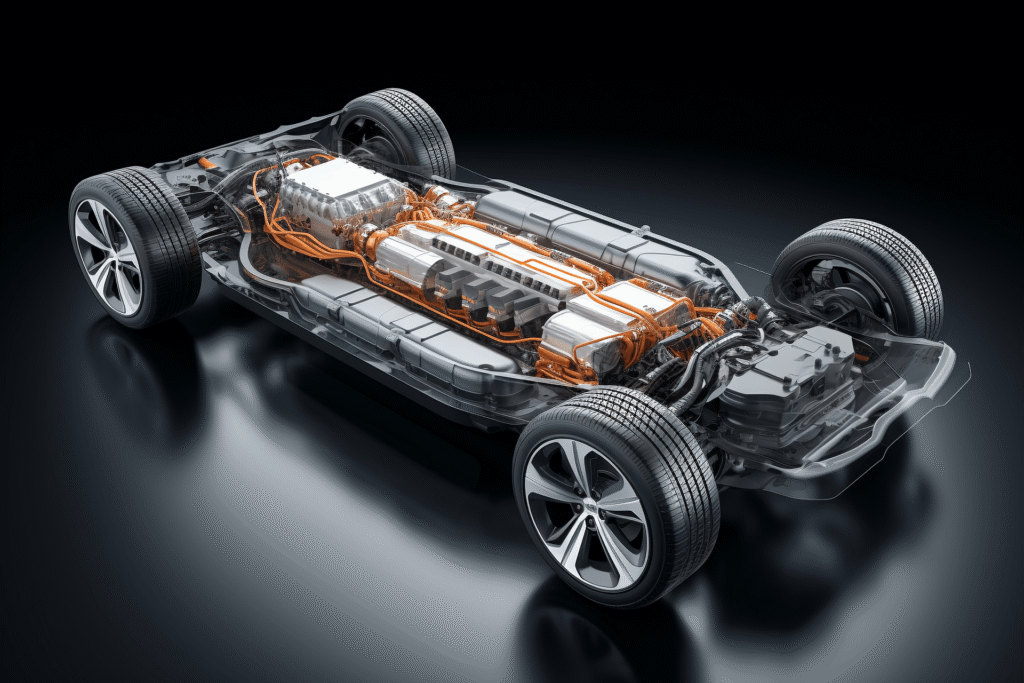
When to Choose Customized Cables:
- Extreme Spatial Limitations:When the minimum bending radius of a standard cable cannot navigate tight routing paths, OMG customizes the conductor geometry (e.g., using ultra-fine stranded copper) and reformulates the insulation material. This achieves a significantly smaller outer diameter (OD) and tighter bending radius without sacrificing electrical insulation or mechanical strength.
- Severe Environmental Hazards:Cables routed near the battery pack or underbody are exposed to battery electrolyte corrosion, sustained high temperatures, and intense electromagnetic interference (EMI). Customized sheath materials (such as specialized cross-linked elastomers or fluoropolymers) and optimized shielding braids ensure long-term durability and electromagnetic compatibility (EMC).
- Aggressive Lightweighting Targets:Custom development allows engineers to tailor the conductor cross-sectional area precisely to the actual duty cycle and current load of the vehicle. By eliminating redundant copper mass, custom cables contribute significantly to reducing the overall curb weight of the vehicle.
3. OMG Cables: Empowering Your Project Decisions
At OMG, we do not just manufacture cables; we engineer your electrical connectivity solutions. Here is how we add value to your design cycle:
Simulation-Driven Development
Before cutting any physical tooling or starting production runs, we conduct finite element analysis (FEA) for bending stress and thermal-fluid simulations. This identifies and mitigates mechanical wear and heat dissipation bottlenecks early in the design stage.
Full-Lifecycle Engineering Support
From initial concept definition and rapid prototyping to mass production and PPAP approval, OMG’s dedicated engineering team collaborates closely with your R&D department to ensure the cable assembly integrates seamlessly into your vehicle’s architecture.
Rigorous Quality Standards
Our manufacturing facilities and processes strictly adhere to IATF 16949 and ISO 9001 quality management systems, providing robust quality assurance that protects your brand’s reputation.
Decision Matrix: Standard vs. Custom Cable Solutions
|
Evaluation Metric |
Standard Cables |
Customized Solutions |
|
Lead Time / Cycle |
Rapid turnaround (Off-the-shelf) |
Deep collaborative development (Structured timeline) |
|
Adaptability |
Generalized, broad compatibility |
Tailored precisely to specific application constraints |
|
Performance |
Meets standard industry benchmarks |
Optimized for extreme thermal, mechanical, & EMI conditions |
|
Cost Profile |
Lower initial unit cost |
Higher initial development cost, but superior TCO (Total Cost of Ownership) in complex applications |
Conclusion
Selecting the right cable is about more than matching numbers on a datasheet—it is about securing a reliable, long-term electrical connection for your vehicle platform. If you are currently in the platform definition stage, or facing routing bottlenecks such as high bending stress, poor heat dissipation, or tight spatial envelopes, OMG is here to help.
We offer a comprehensive, one-stop service from standard product selection to custom R&D, making your EV electrical system safer, lighter, and more efficient.
Contact our engineering team today to receive a professional design evaluation for your next project.