

As the global transition toward electric mobility accelerates, the demand for reliable and safe EV charging cables has reached unprecedented levels. However, the regulatory landscape for these components is divided by regional requirements—primarily the European EN 50620 and the North American UL 2263.
For manufacturers and infrastructure developers, understanding these technical differences is critical for ensuring interoperability and safety. This guide breaks down the core distinctions between these two dominant standards.
1. What is the EN 50620 Standard? (European Region)
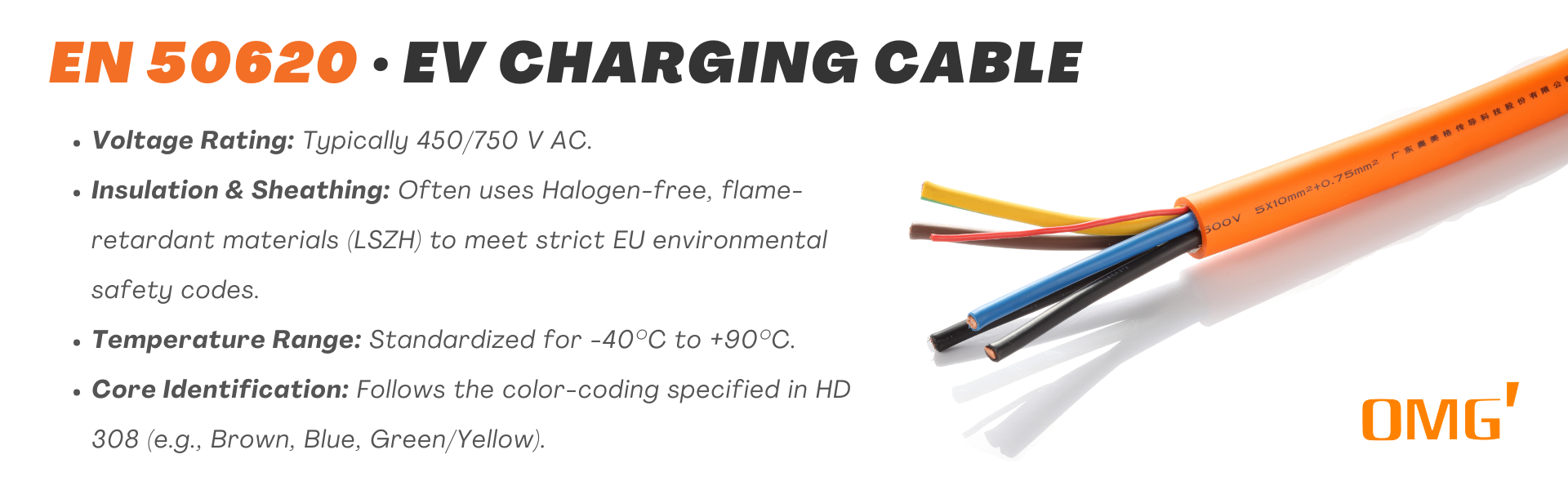
The EN 50620 standard specifies the design, dimensions, and test requirements for flexible cables with rated voltages up to 450/750 V. These cables are intended for use in EV charging systems that comply with IEC 61851-1.
Key Technical Characteristics:
- Voltage Rating:Typically 450/750 V
- Insulation & Sheathing:Often uses Halogen-free, flame-retardant materials (LSZH) to meet strict EU environmental safety codes.
- Temperature Range:Standardized for -40°C to +90°C.
- Core Identification:Follows the color-coding specified in HD 308 (e.g., Brown, Blue, Green/Yellow).
2. What is the UL 2263 Standard? (North American Region)
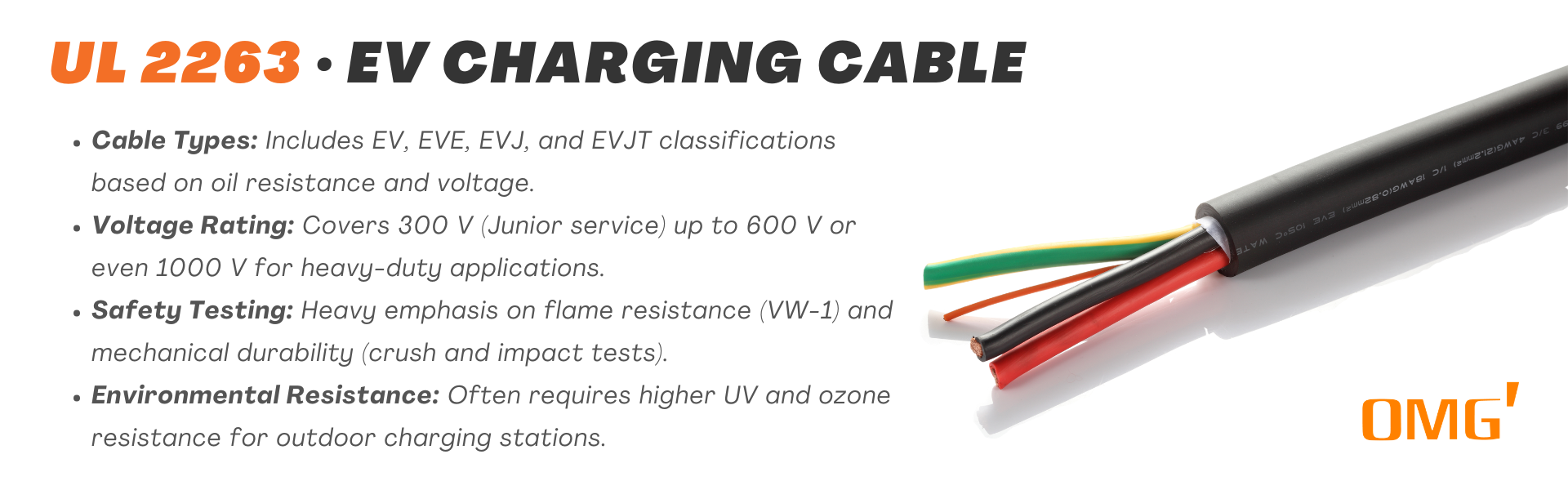
In North America, UL 2263 serves as the primary standard for Electric Vehicle (EV) Cable. It is closely integrated with UL 62 (Flexible Cords and Cables) and often references UL 758 (Appliance Wiring Material) for specific internal conductor requirements.
Key Technical Characteristics:
- Cable Types:Includes EV, EVE, EVJ, and EVJT classifications based on oil resistance and voltage.
- Voltage Rating:Covers 300 V (Junior service) up to 600 V or even 1000 V for heavy-duty applications.
- Safety Testing:Heavy emphasis on flame resistance (VW-1) and mechanical durability (crush and impact tests).
- Environmental Resistance:Often requires higher UV and ozone resistance for outdoor charging stations.
3. Data Comparison: EN 50620 vs. UL 2263
To provide a clear technical overview, the following table highlights the divergence in specifications:
|
Feature |
EN 50620 (European) |
UL 2263 (North American) |
|
Rated Voltage |
450/750 V |
300 V / 600 V / 1000 V |
|
Conductor Material |
Class 5 or 6 Flexible Copper |
Annealed Copper (Stranded) |
|
Flame Retardancy |
EN 60332-1-2 |
UL 1581 (VW-1 / FT2) |
|
Material Types |
Halogen-free (TPU/TPE) |
PVC, TPE |
|
Standard References |
IEC 62893 / IEC 61851 |
UL 62 / UL 758 |
|
Bending Radius |
Typically 3 to 5 \times D (Fixed) |
Based on AWG size and type |
4. Why Compliance Matters for EV Infrastructure
Using standardized high-voltage cables for EVs is not just about legality; it’s about system longevity and user safety. Compliance with these standards ensures:
- Thermal Stability:Cables must handle high current loads without excessive heat buildup.
- Chemical Resistance:Protection against automotive fluids, oils, and salt spray.
- Flex Life:EV cables are handled daily; they must withstand thousands of bending cycles without the insulation cracking.
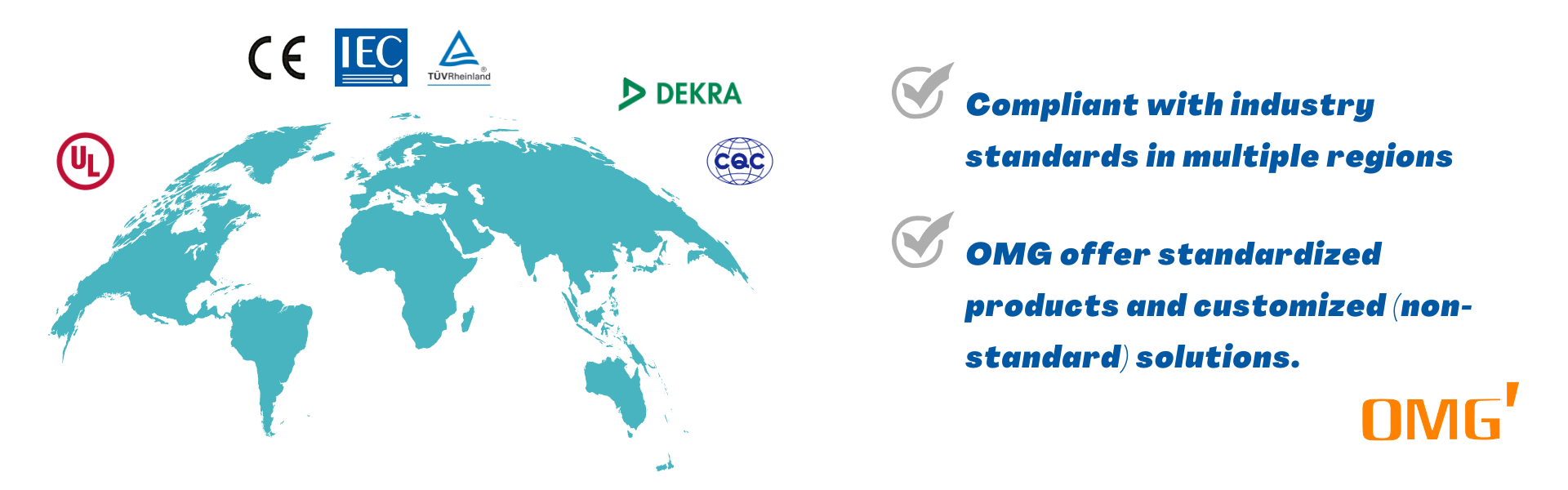
- Global Export:Manufacturers like Guangdong OMG’ Transmission Co., Ltd. (OMG’) ensure their products meet these cross-border requirements to facilitate global trade.
5. Frequently Asked Questions (FAQ)
Are EN 50620 cables compatible with UL 2263 systems?
While the physical copper may be similar, the insulation materials and safety ratings (like flame retardancy levels) differ. A cable certified only for EN 50620 may not legally or safely be used in a project requiring UL 2263 certification in the US. Conversely, it is also the case.
Which standard is better for liquid-cooled cables?
Liquid cooling is often an extension of these standards. High-power charging (HPC) typically follows IEC 62893 (related to EN 50620) or specific UL outline investigations (like UL 2251/2263 derivatives) to manage the cooling medium’s safety.
What are the “Long-Tail” requirements for EV cables?
Beyond voltage, cables must meet “long-tail” environmental factors such as Hydrolysis resistance, Microbe resistance, and Low-temperature impact strength at -40°C.
Conclusion
Navigating the complexities of EV charging cable standards is essential for the safety and efficiency of the modern grid. Whether you are adhering to the European EN 50620 or the American UL 2263, selecting a manufacturer with a proven track record in high-voltage transmission is paramount.
Manufacturer’s Note:
OMG’ focuses on premium cable manufacturing; we provide charging cables & high voltage-cables for EVs, excluding the plug and connector.
Get the technical specification with one click!Or you can directly send us an email so that we can respond to your needs more quickly:leo@omigr.com