

For connector manufacturers, charging station integrators, and B2B procurement teams supplying Europe and North America, selecting the right ev cable goes far beyond matching conductor cross-sections to current ratings. Charging cables operate in demanding outdoor environments, endure thousands of bending cycles, and face strict regional safety regulations.
Choosing an under-specified electric vehicle charging cable can lead to failed certification audits, premature jacket cracking, or costly field replacements. Below is a structured breakdown of the technical, regulatory, and mechanical factors that define reliable ev charging cables for European and American applications.
1. Navigating Regional Compliance: Europe vs. North America
The first step in sourcing any car charger cable is aligning with the regulatory framework of the target deployment region. European and North American standards differ significantly in material testing, voltage classifications, and flame-retardant requirements.
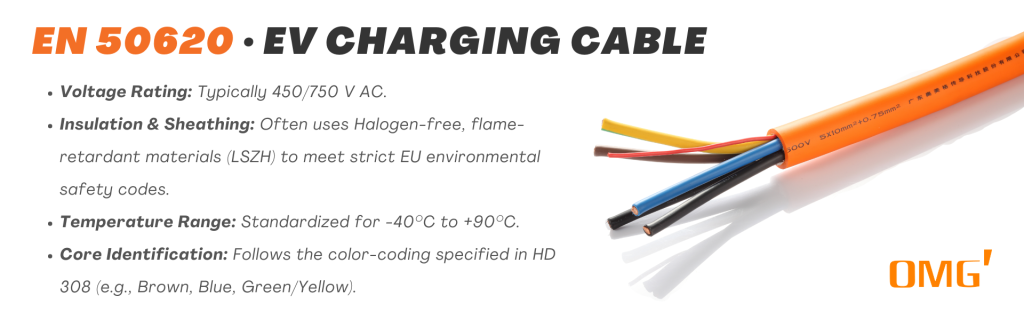
European Standards: EN 50620 and IEC 62893
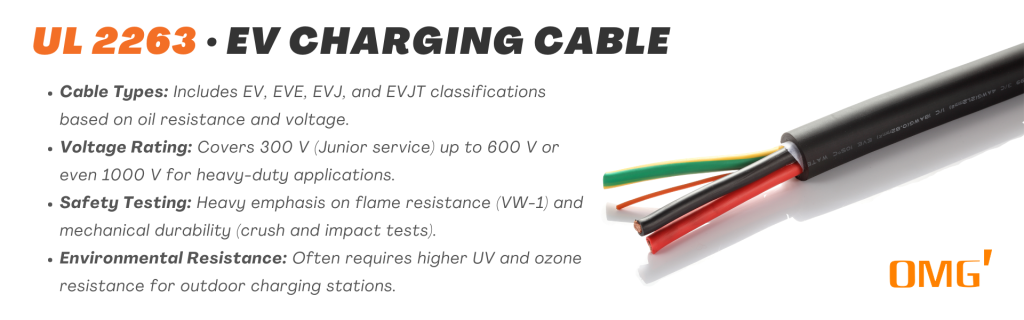
For products entering the European Union and IEC-aligned markets, compliance with EN 50620 cable specifications and the IEC62893 charging cable standard is mandatory. These standards govern cable construction, halogen-free low-smoke (LSZH) jacket requirements, ozone resistance, and mechanical endurance across AC Mode 2, AC Mode 3, and DC Mode 4 charging systems.
North American Standards: UL 2263 (EVE & EVJE)
In the United States and Canada, charging assemblies require UL2263 charging cables (covering cable types such as EVE for heavy-duty and EVJE for extra-hard usage). UL testing places heavy emphasis on flame propagation, crush resistance, cold bend performance, and thermal aging.
For manufacturers exporting globally, partnering with experienced EV charging Cable manufacturers that already hold dual-region certifications streamlines product localization. OMG EV Cable is one of the earliest manufacturers to obtain full-series UL certifications covering both EVE and EVJE categories, alongside comprehensive European compliance—helping OEMs shorten validation timelines when launching cross-regional charging equipment.
2. Adapting to the NACS Shift: Small Diameter and High Flexibility
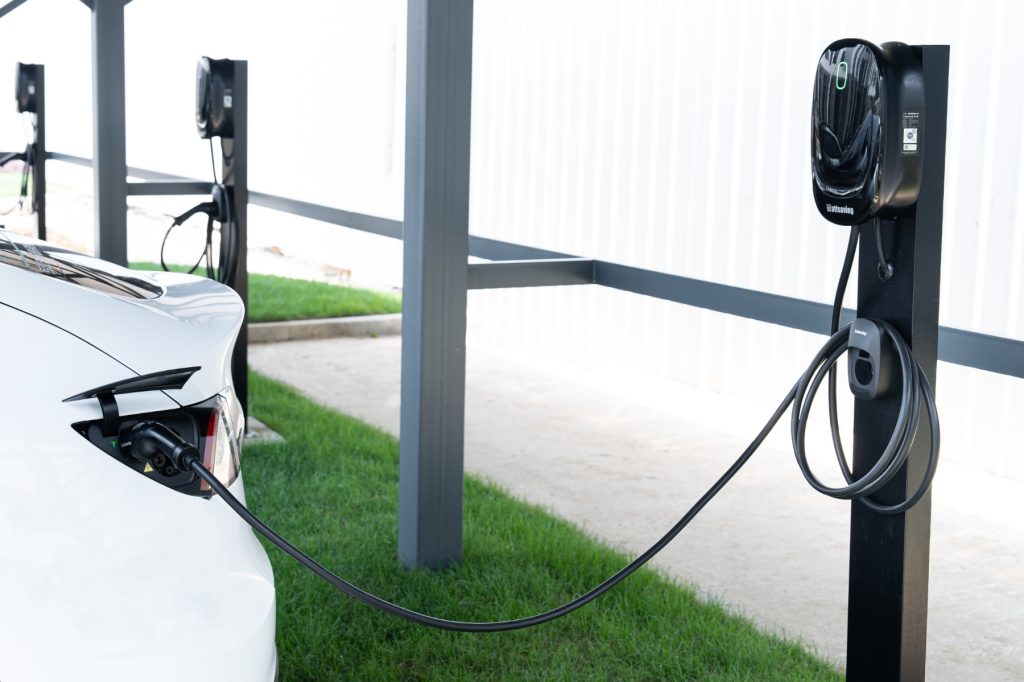
The rapid adoption of the North American Charging Standard (NACS / SAE J3400) has reshaped cable ergonomics. Unlike bulky legacy DC connectors, NACS integrates AC and DC pins into a compact, single-handed plug housing. This places strict physical constraints on the NACS cable attached to it.
If a cable is too thick or rigid, it exerts excessive torque on the user’s wrist and increases mechanical stress at the connector gland. When evaluating NACS-compatible raw cables, engineering teams should prioritize three physical attributes:
- Reduced Outer Diameter (OD):Optimized conductor stranding and high-efficiency insulation compounds allow smaller overall cable diameters without sacrificing current-carrying capacity.
- Lightweight Construction:Lower weight per meter improves user handling at public fast-charging stalls and residential wallboxes.
- High Flexibility:Fine-stranded copper conductors paired with specially formulated elastomer or TPU jackets ensure smooth bending even in tight installation spaces.
OMG EV Cable engineered its NACS cable line specifically around these ergonomic demands—delivering a compact outer diameter, lightweight profile, and high flexibility that simplify connector assembly and improve end-user handling.
3. Environmental Durability in Outdoor Charging Scenarios
Public and commercial charging stations operate around the clock in exposed parking lots, fleet depots, and highway corridors. Over a multi-year service life, an electric vehicle charging cable faces constant chemical and thermal stress.
Procurement specifications should verify resistance across six critical environmental factors:
- Extreme Temperature Tolerance:Cables must remain pliable during sub-zero winters (typically down to -40°C) without stiffening, while resisting thermal deformation under continuous high-current charging and summer solar exposure (up to +90°C or +105°C depending on rating).
- Oil and Chemical Resistance:Resistance to automotive fluids, lubricants, and road de-icing salts prevents jacket swelling and degradation.
- Acid and Alkali Resistance:Protects insulation integrity in industrial fleet yards or coastal environments.
- Water and Moisture Resistance:Prevents water ingress that could compromise dielectric strength or corrode copper strands.
- Abrasion Resistance:Essential when cables are dragged across rough concrete or asphalt surfaces daily.
- Anti-Cracking Performance:High-grade jacket formulations prevent surface micro-cracks caused by UV exposure, ozone, and repetitive flexing.
OMG EV Cable formulates its outer sheath materials to withstand high and low temperatures, oil, acid, alkali, water, abrasion, and cracking—ensuring stable electrical insulation across harsh climates.
4. Structural Integrity: Anti-Breakage Design and Voltage Compatibility
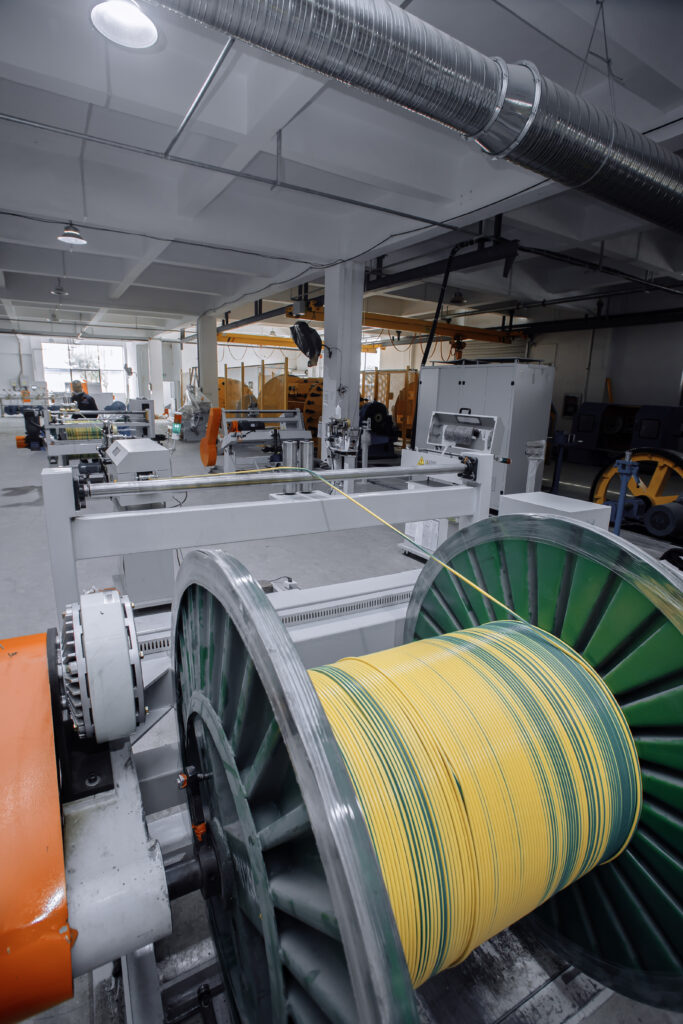
A frequent failure mode in field-deployed charging assemblies is internal conductor fatigue or control-wire breakage near the connector strain relief. Repeated coiling, twisting, and accidental vehicle run-overs put localized tension on power and signal cores.
To counter this, leading EV cable manufacturers incorporate internal anti-breakage structural designs. This includes optimized lay lengths, high-tensile filler elements or aramid reinforcement, and balanced core geometry that distributes mechanical pulling forces evenly rather than concentrating stress on thin signal wires (such as CP and PP lines).
Additionally, equipment makers often manage multiple product lines—ranging from portable 120V/240V Level 1 and Level 2 chargers to commercial AC pedestals and high-power DC fast chargers. Sourcing cables with broad voltage ratings and wide scenario compatibility allows procurement teams to standardize raw materials across different charger models, simplifying inventory management and harness assembly.
OMG EV Cable integrates dedicated anti-breakage construction across its charging cable portfolio while maintaining broad voltage and application compatibility across residential, commercial, and DC fast-charging equipment.

5. Summary Checklist for B2B Cable Sourcing
Before finalizing a bill of materials (BOM) for your next connector or EVSE project, verify the following with your cable supplier:
- Certification Traceability:Confirm active UL file numbers (EVE/EVJE) for North America and TÜV/CE test reports for EN 50620 / IEC 62893 in Europe.
- Assembly Processability:Check jacket strippability, core color-coding consistency, and compatibility with your overmolding or crimp-termination processes.
- Mechanical Test Data:Request bending cycle results, cold-bend test records, and tensile strength metrics.
Partner with OMG EV Cable for Your Next Project
Whether you are developing compact NACS assemblies, European Mode 3 charging leads, or multi-standard EVSE platforms, choosing the right raw cable partner directly impacts your product reliability and time to market.
Contact OMG EV Cable today to request detailed technical datasheets, certification documentation, or customized cable samples tailored to your connector and charging equipment specifications.
FAQ
Q1: What is the difference between EN 50620, IEC 62893, and UL 2263 for EV charging cables?
EN 50620 cable standards apply primarily to the European market, while IEC62893 charging cable specifications serve as the broader international standard outside North America. Both focus on halogen-free, low-smoke materials and European voltage ratings. In contrast, UL2263 charging cables (including EVE and EVJE types) are required for the U.S. and Canadian markets, emphasizing specific UL flame, crush, and thermal endurance tests.
Q2: Why are diameter and flexibility so critical when sourcing a NACS cable?
Because NACS connectors have a compact, lightweight housing, a stiff or oversized NACS cable creates excessive leverage at the plug neck. A smaller outer diameter, lighter weight, and higher flexibility improve user ergonomics during daily plugging and reduce mechanical fatigue at the cable-to-connector junction.
Q3: How do charging cables prevent internal wire breakage under heavy daily use?
High-reliability ev charging cables use fine-stranded oxygen-free copper conductors, optimized core stranding pitches, and internal anti-breakage reinforcement structures. These design elements absorb tensile and torsional forces when cables are coiled, pulled, or dropped, protecting thin pilot/signal wires from snapping.
Q4: Can one EV charging cable series cover multiple charging equipment types?
Yes, provided the cable is engineered with broad voltage and scenario compatibility. Many manufacturers select multi-rated cable platforms that adapt to portable EVSE units, wall-mounted AC chargers, and commercial charging stations—helping streamline supplier qualification and inventory control.